 Anthony Rizvanov
Project · Jul 2024 – present
TIMS
Trumpet Instrument: MIDI Synthesizer
A MIDI wind controller and standalone synthesizer meant to play like a real trumpet: breath sets the dynamics, three valves transpose and the lips choose the partial. I play jazz trumpet professionally, so the target is an instrument I would perform on.
Status: 9 prototype stages built, 3 worked. Professional four-board version designed, not yet fabricated.
Prototype History
Listed by date · stage numbers are my own
-
01Jul 2024
Breadboard beginning
Worked: valvesA breadboard with a Raspberry Pi 5, a battery and three valve buttons with LEDs. The valves worked, and this is where my electronics work started.
Valve buttons on the breadboard, July 2024. -
02Aug 2024
Orange acoustic-hybrid body
Gave upValve electronics mounted to a Yamaha Silent Brass mute system.
-
03Sep 2024
Black acoustic-hybrid body
Gave upA hybrid body with a battery and snap-off parts.
-
04Apr 2025
3D-pen sax-trumpet with a PLA mouthpiece
LostA small 3D-pen prototype; one photo survives.
-
05Apr 2025
First 3D-pen frame
Worked: partialsButton valves, an ESP32-S2 board, a pinky ring and breadboard power rails in a hand-drawn 3D-pen frame. The first prototype that changed partials.
First partial changes, April 2025. -
06Apr 2025
“Nautilus” breath prototype
Worked: played melodiesBreath-controlled, with no lip buzz. It went from a hard-to-control first note to melodies with double-tongued articulation in four days.
The first breath-controlled note. Double-tongued articulation. An attempt at a popular melody, April 2025. -
07Jul – Aug 2025
3D-pen frame with display and haptics
Gave upGold valve buttons, a TFT display, a rear motherboard and five transistor-driven vibration motors for haptic feedback. It powered on and the display came up; the build stopped there.
Display bring-up, August 2025. -
08Nov 2025
Box prototype
Gave upAn ESP32-S2 Metro Express with LEDs and a breath sensor in a box enclosure.
-
09Feb 2026
Protoboard and etched PCB
Gave upCapacitive-touch valves, a buck converter, a partial-select potentiometer and a breath sensor checked against a PSI gauge, on protoboard and a hand-etched board.
-
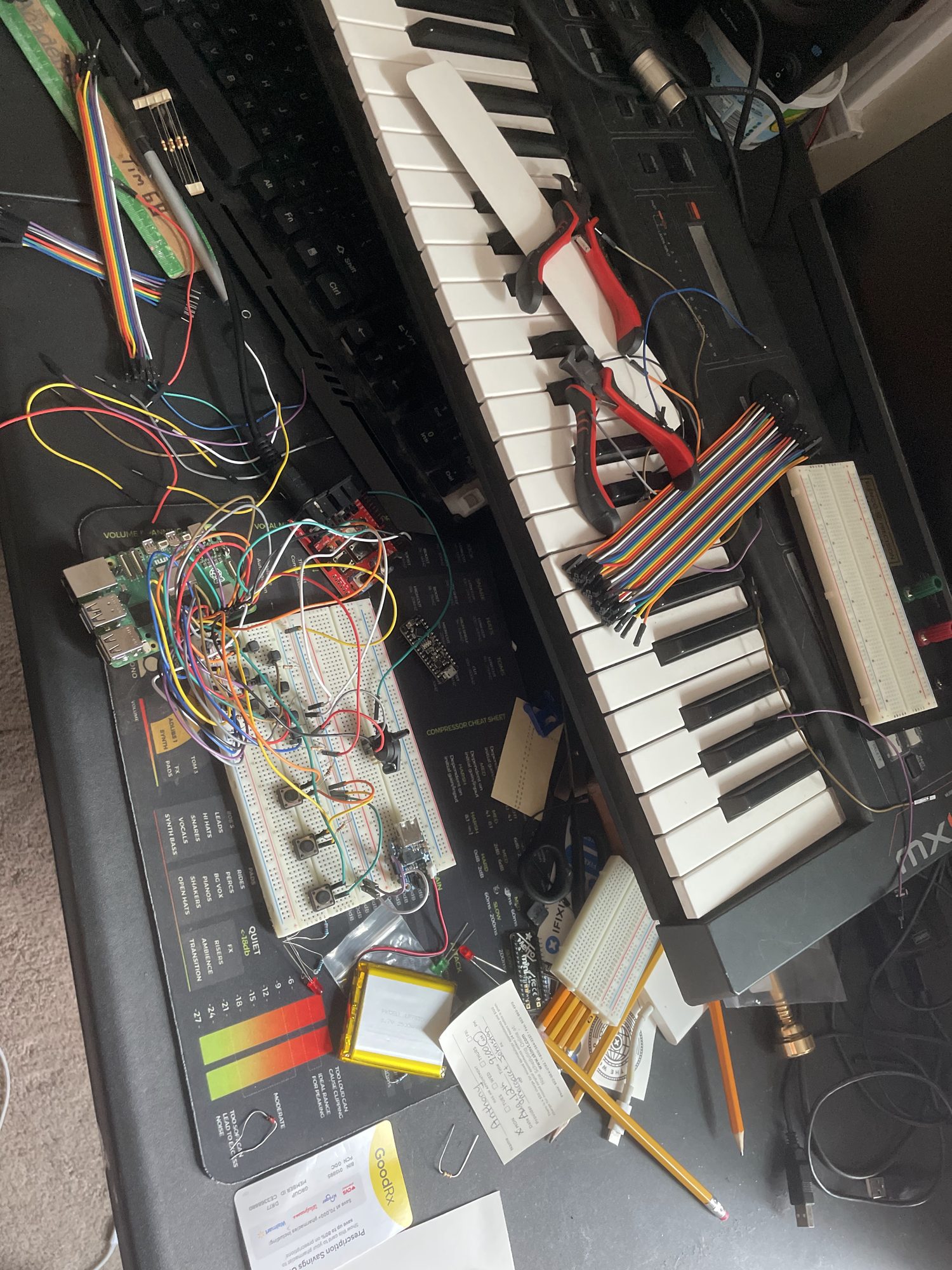
Stage 01: breadboard and Raspberry Pi 5, July 2024. -
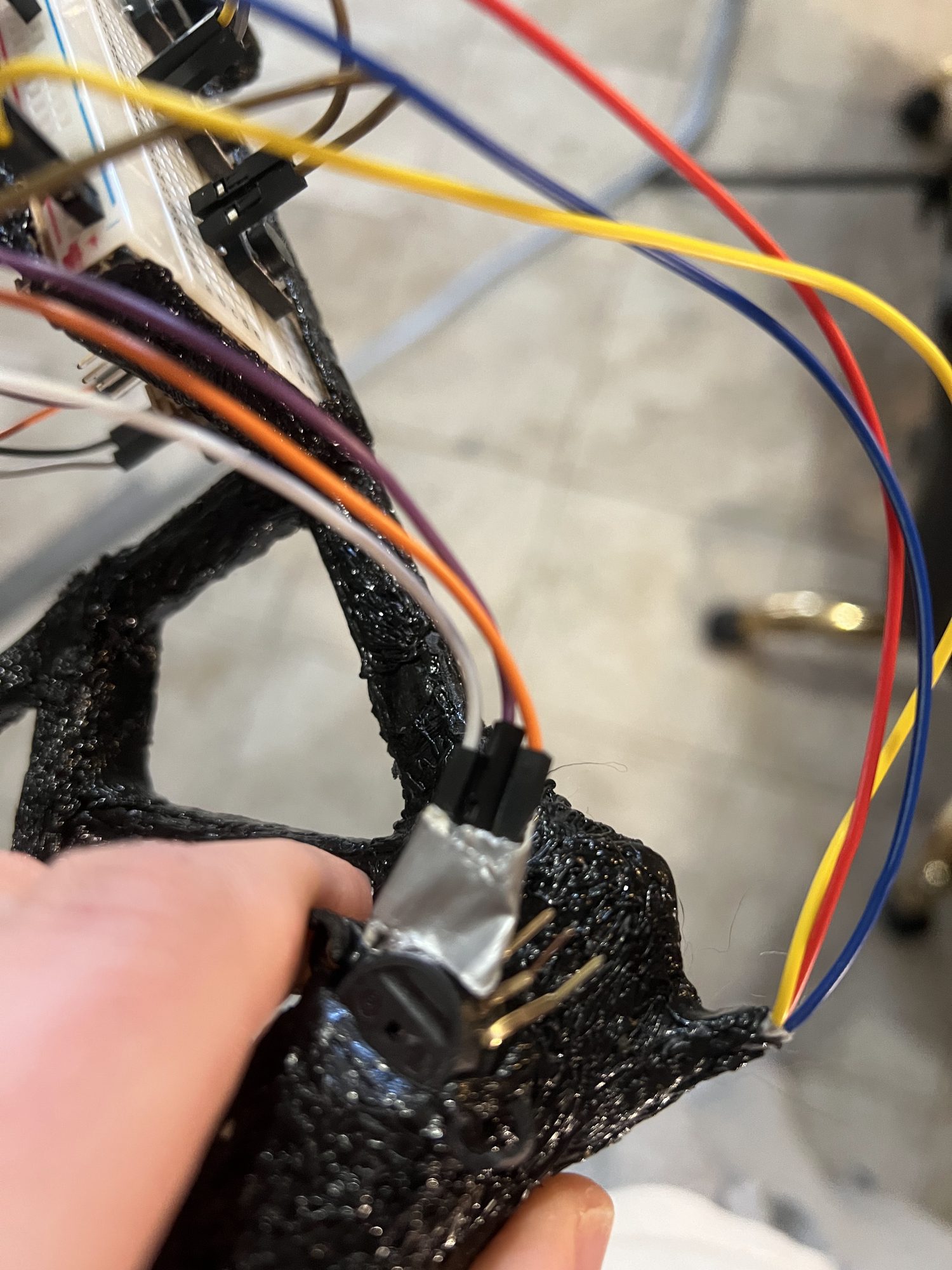
Stage 05: the first 3D-pen frame. -
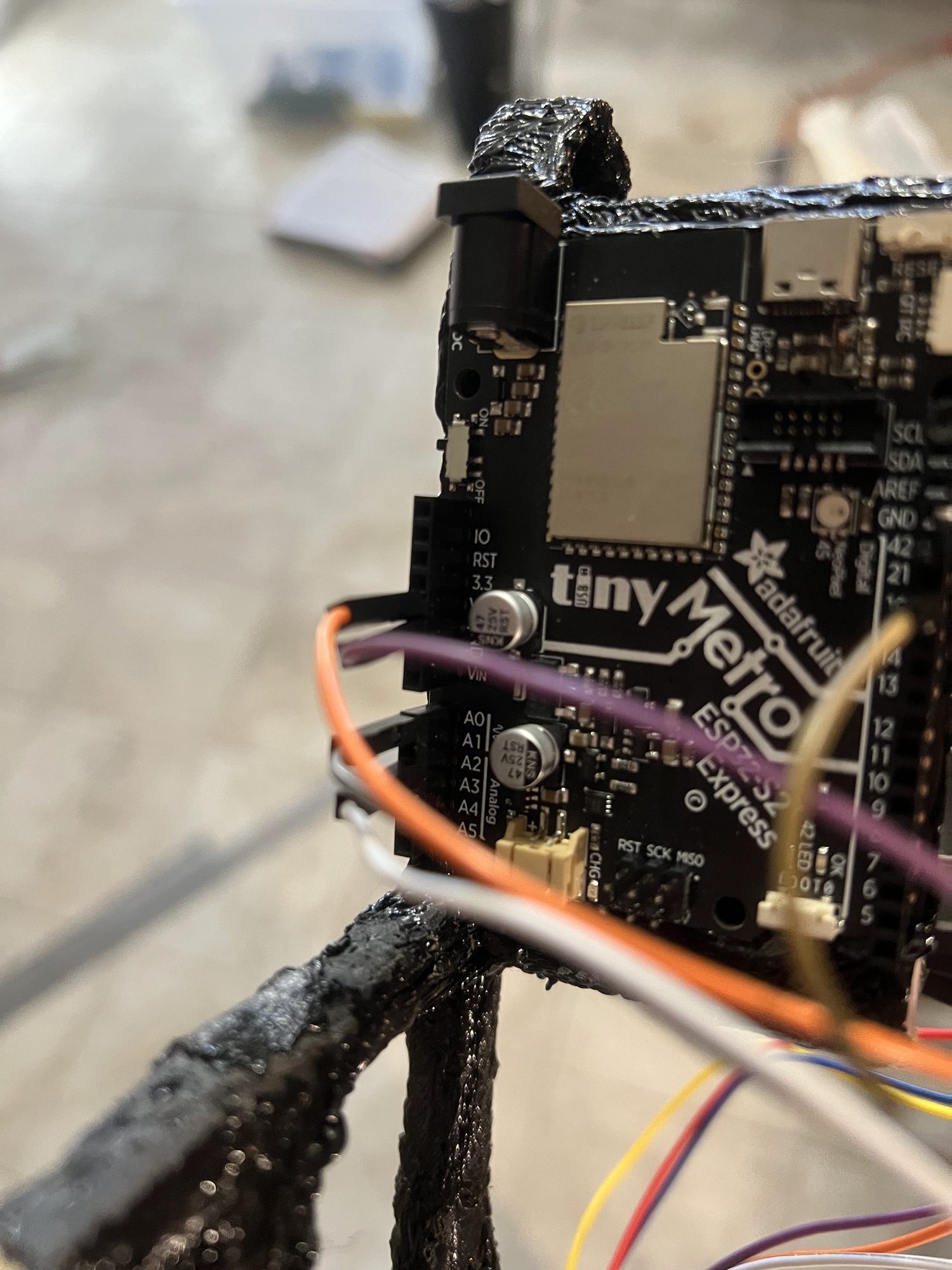
Stage 05: ESP32-S2 board under the pinky ring. -
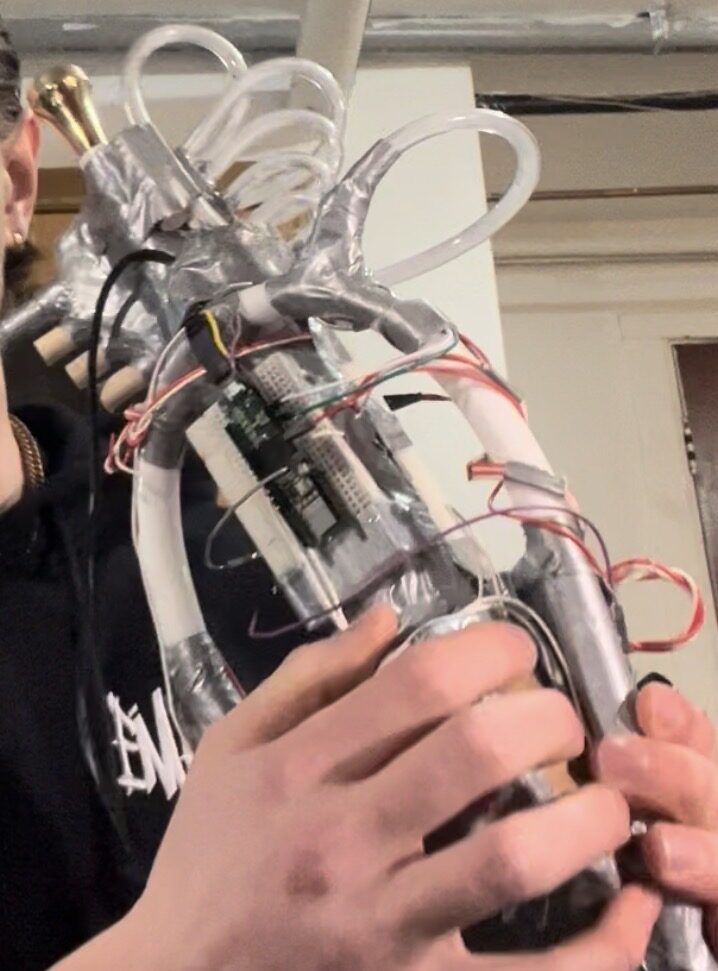
Stage 06: the Nautilus breath prototype. -
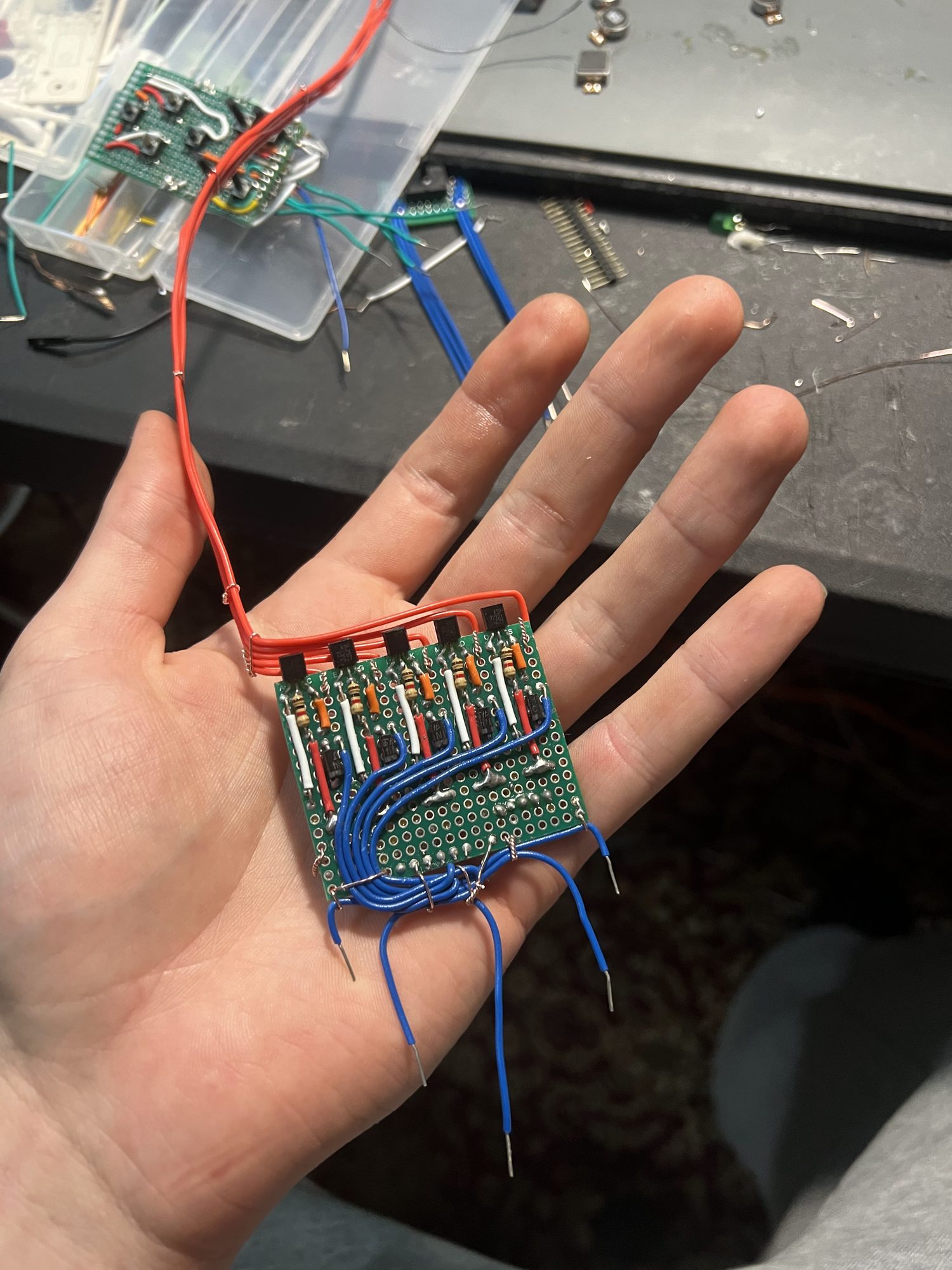
Stage 07: transistor drivers for five haptic vibration motors. -
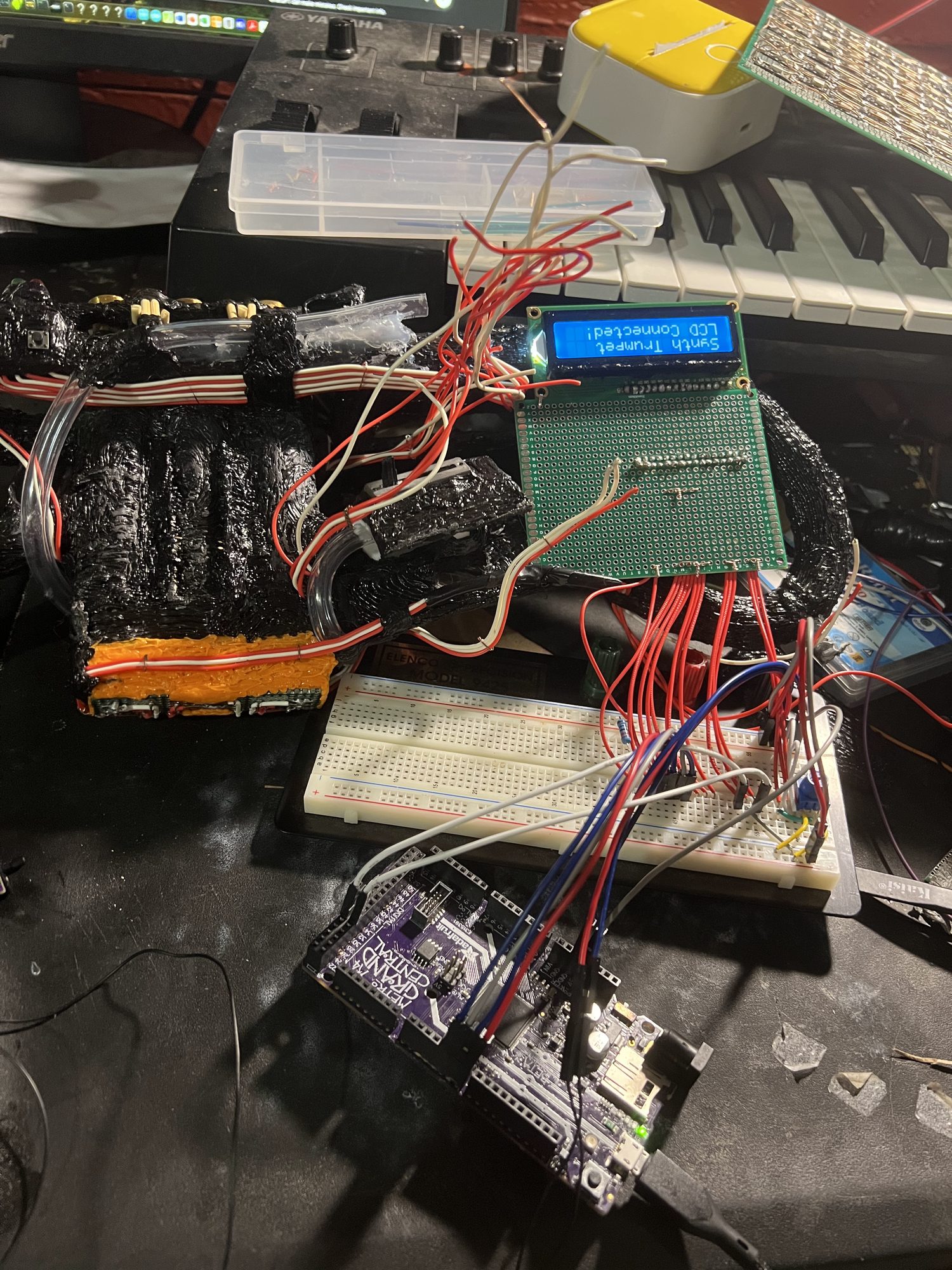
Stage 07: full prototype with the TFT display.
Professional Version (Mk.1)
Handheld professional model · designed · not fabricated
The professional version is built around a Teensy 4.1 with an SGTL5000 audio adaptor. One processor hosts MIDI, synthesizes the audio and reads every breath, lip and valve sensor. Outputs: 5-pin DIN MIDI, USB-MIDI, headphone and line out. Power comes in at 9 V over USB-C Power Delivery and steps down to 5 V and 3.3 V.
| Board | Status |
|---|---|
| A · Main | Schematic complete |
| B · Mouthpiece | Schematic complete |
| C · Valves | Schematic complete |
| D · Control panel | Layout complete |
All four are 2-layer boards. Netlists and the BOM are complete; nothing has been fabricated. Three smaller models are planned for other players and price points, from a desktop version to a handheld intermediate and advanced model.
Design Decisions
- ESP32-S3 to Teensy 4.1. Processing headroom, native MIDI and audio synthesis, and all the sensor math on one chip.
- 9 V input. Power flows one way, from the wall down to 5 V and 3.3 V, and the original 9 V display needs no boost stage.
- Four boards. They follow the shape of the instrument, cut cost, make repair simpler and keep the sensor signals away from other noise.
- Characterize before wiring. A 5-pin switch for the control panel came without a datasheet, so I measured it first. Read the switch report.